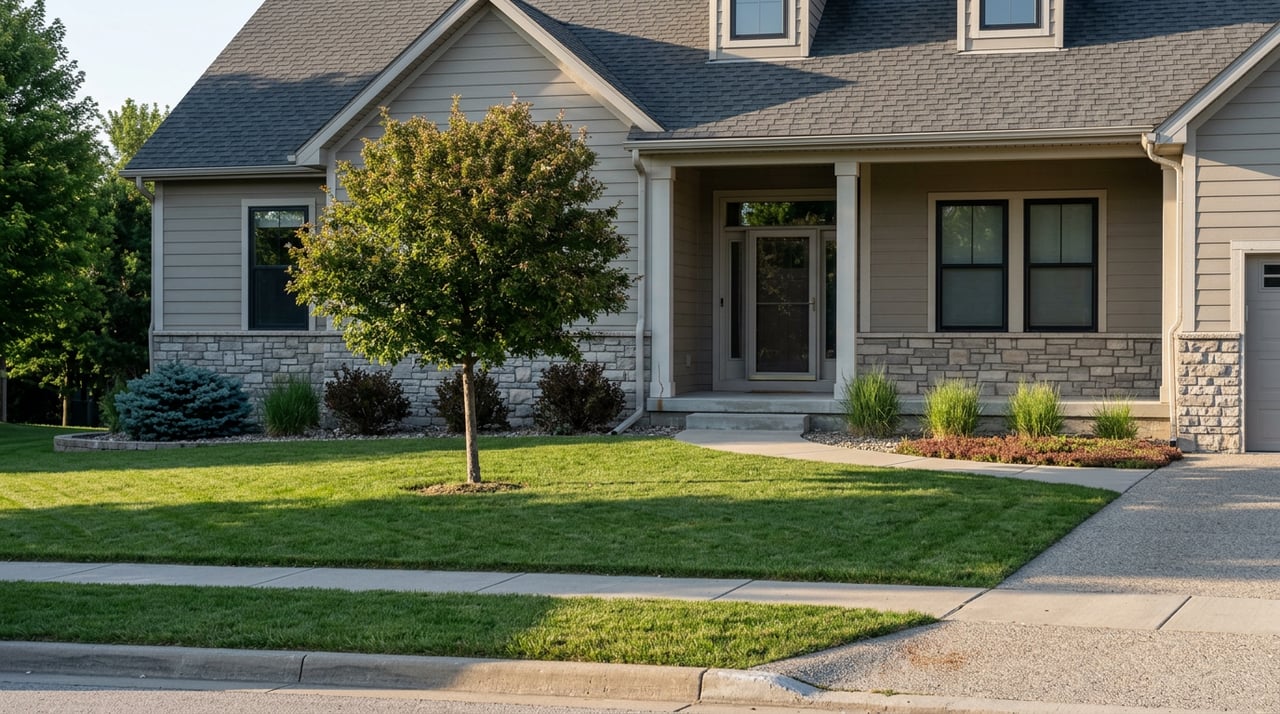
Two Timnath Homes, One Price, Very Different Bills
September 3, 2026
September 3, 2026
Picture two new-construction listings in Timnath, half a mile apart, both priced at $700,000. Same builder-grade finishes, same square footage, same school district boundary. A buyer comparing them on a portal sees identical numbers and assumes the decision comes down to lot orientation or which kitchen layout they prefer.
It doesn't. One of those homes can carry an annual property tax bill roughly $1,900 higher than the other, and the house itself has nothing to do with it. The difference lives in a line most buyers don't read until after closing: the metro district.
Anyone shopping Timnath in 2026 has already seen the headline numbers. Homes sold for a median of $750,000 in July 2026, with days on market stretching to 99 compared with 78 a year earlier. List price per square foot was down 4 percent year over year as of June 2026, even as sales volume climbed to 201 homes in July 2026, up from 178 the year before.
Read together, that looks like a straightforward cooling story: more inventory, longer marketing times, softer pricing. It's not wrong, but it's incomplete. A median blends homes that sit in entirely different tax jurisdictions, and Timnath's newer subdivisions are almost never in just "Timnath." They're inside a specific, numbered special district that taxes them independently of the town, the county, and the school district.
Metro districts are local units of government, authorized under Colorado's Special District Act, created to finance the roads, water lines, sewer systems, and parks that come with new development. A builder doesn't pay for that infrastructure out of the sale price. The district issues bonds instead, and the debt gets repaid over decades through a mill levy that shows up as a separate line on the property tax bill, not as an HOA due.
That structure means a home's total cost of ownership depends on which specific district it falls inside, and Timnath has several with very different levies. Southwest Timnath Metropolitan District Nos. 1 through 4 carry a certified 2025 mill levy of 63.680 mills, all of it debt service. South Timnath Metropolitan District No. 2 sits at 44.576 mills, while South Timnath Metropolitan District No. 1, just next door in the same family of districts, is certified at 19.104 mills. Timnath Ranch Metropolitan District's service plan caps its debt levy at 50 mills.
A parcel sits inside exactly one of these, never all of them at once. But the levies don't overlap in size, and the gap between the highest and lowest is enormous for two homes that might list for the same price.
| District | 2025 Certified Mill Levy | What It Funds |
|---|---|---|
| Southwest Timnath Metro District Nos. 1-4 | 63.680 mills | Debt service on infrastructure bonds |
| South Timnath Metro District No. 2 | 44.576 mills | Debt service |
| South Timnath Metro District No. 1 | 19.104 mills | Debt service |
| Timnath Ranch Metro District | Capped at 50 mills | Debt service, per service plan |
Colorado's 2026 residential assessment rate for local government mill levies is 6.8 percent, applied after a 10 percent reduction on the first $700,000 of a home's actual value, per the state's Division of Property Taxation. That reduction and rate are what turn a market price into the number your mill levy actually taxes.
Take that $700,000 home. Subtract 10 percent of the first $700,000, which is $70,000, leaving $630,000. Multiply by 6.8 percent and the assessed value comes to $42,840.
Apply the Southwest Timnath levy of 63.680 mills to that assessed value and the district's share of the tax bill alone comes to roughly $2,728 a year. Apply South Timnath Metro District No. 1's levy of 19.104 mills to the identical assessed value and the district's share drops to about $818 a year. That's a gap of roughly $1,900, on the same-priced home, before the county, school district, or town's own mill levies are even added in.
Neither number appears in a listing price. Neither shows up in a median. Both are real, recurring, and tied to the property for as long as the district's bonds remain outstanding, which is typically decades, not years.
Timnath's active new-construction landscape makes this more than a theoretical exercise. Toll Brothers at Timnath Lakes, with its Summit and Overlook Collections, sits on a resort-style master plan built around 40 acres of lakes and seven miles of trails, the kind of amenity package that metro district bonds typically fund up front and homeowners repay over time. Century Communities' Timnath Lakes community carries a similar structure. Trailside, Wildwing, Serratoga Falls, and Harmony Club round out the list of subdivisions actively building and closing homes in Timnath this year.
Each of these sits within its own district boundary, and the amenities that make a listing photo attractive, the clubhouse, the trail network, the community garden, are frequently the exact infrastructure a district's bonds were issued to build. That's not a downside by itself. Streets, water, and parks are real value. But it means the sales price and the tax bill are financing two different things, and a buyer comparing communities on price per square foot alone is missing half the ledger.
A buyer comparing two Timnath homes, or comparing Timnath to a neighboring town, gets a far more honest picture by requesting a short stack of documents before getting attached to a specific address:
None of this shows up in a listing description. All of it shows up on the property tax bill, which is exactly why it belongs in the comparison before the offer, not after the first tax notice arrives.
The house is priced once. The district's mill levy is billed every year the bonds are outstanding. Only one of those numbers is on the sign in the yard.
Is a metro district the same thing as an HOA? No. An HOA is a private association funded through member dues and covenants. A metro district is a unit of local government funded through property tax mill levies certified by the county. A single Timnath home can be subject to both at once, with separate budgets, separate boards, and separate obligations.
How do I find out which district applies to a specific address? The clearest starting point is the Larimer County Assessor's parcel record, which will show the taxing entities attached to that property, followed by the district's own service plan and current levy, both public record.
Does a lower mill levy always mean a better deal? Not automatically. A lower levy can mean less debt was issued for infrastructure, which is worth confirming, since it may also mean fewer or later amenities. The levy is one input into total cost of ownership, not a standalone verdict on the community.
Timnath's median price tells you what the market did last month. It doesn't tell you which specific district a parcel sits in, and that's the number that follows a buyer for years after closing. If you're comparing homes here, or comparing Timnath to Windsor, Wellington, or Fort Collins, run the mill levy math before you run the comps.
Catherine Montgomery has spent decades working Northern Colorado's neighborhood-level details, the kind that don't show up on a portal but show up on a tax bill. If you're weighing a Timnath purchase against another Northern Colorado community, Start Your Home Search with a conversation grounded in the numbers that actually apply to your address, not just the ones on the sign.
September 3, 2026
August 27, 2026

August 20, 2026
August 13, 2026

August 6, 2026

August 6, 2026
July 23, 2026
July 16, 2026

July 9, 2026
Known for my approachable, professional style, I combine strong negotiation skills with modern marketing and technology to help clients achieve their real estate goals.

Catherine Montgomery
PO BOX: 270005 Fort Collins, CO 80527