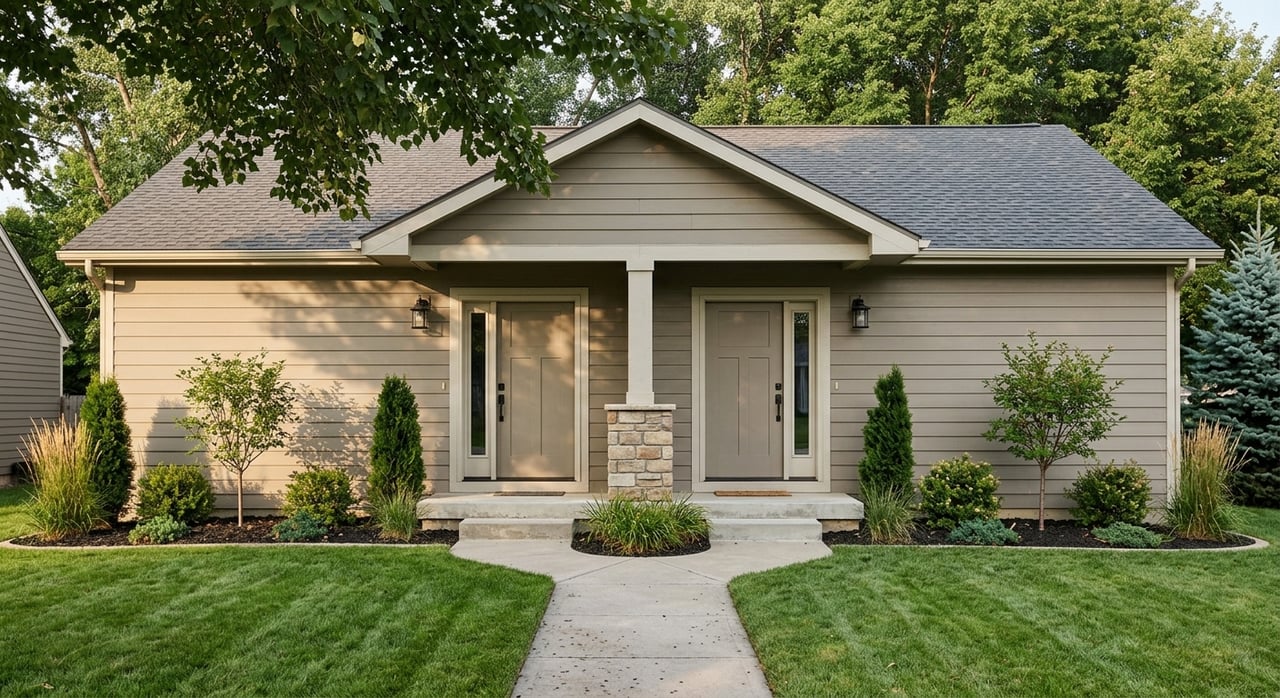
Exploring Investment Property Options In Loveland
July 23, 2026
July 23, 2026
Are you wondering whether Loveland is the right place to buy an investment property? You are not alone. With steady population growth, a broad local employment base, and clear housing demand, Loveland gives investors several paths to explore. The key is knowing which property types fit the market and what to check before you make an offer. Let’s dive in.
Loveland continues to grow. The city’s estimated population reached 81,387 in July 2025, which is up 6.6% from 2020. Census data also shows 34,367 households, a 62.2% owner-occupied housing rate, median household income of $84,604, and median gross rent of $1,730.
That matters if you are thinking about long-term rental demand. Loveland is not a one-note market built around a single age group or industry. About 19.0% of residents are under 18, and 21.3% are 65 or older, which points to demand from a mix of household types.
Current pricing places Loveland in a mid-$500,000 purchase market. Zillow reports a typical home value of $504,321 and a median sale price of $511,483. Homes are also moving relatively quickly, with a median of 15 days to pending.
Loveland’s rental market shows both demand and variation by property size. Zillow reports an average rent of $1,750, with average advertised rents of $1,265 for studios, $1,370 for one-bedroom units, $1,600 for two-bedroom units, $2,450 for three-bedroom homes, and $3,867 for four-bedroom homes.
That spread is useful when you compare property options. A smaller unit may offer a lower entry point, while larger homes may support stronger gross rent. Your best fit depends on your budget, financing, and comfort with different tenant profiles.
Another important signal is vacancy. Loveland’s regional housing needs assessment notes that rental vacancy rates remain below 6%. In a market with rising rents and a documented housing shortfall, that points to continued pressure on available rental inventory.
Single-family detached homes remain the dominant local housing type, making up 63% of Loveland’s housing stock. For many investors, that makes this category the easiest starting point because it aligns with the city’s existing housing pattern.
These homes can appeal to renters who want more space, off-street parking, garages, or longer-term tenancy. In a city with an average household size of 2.26 people and a strong owner-occupied base, detached rentals can fit households looking for flexibility without buying right away.
Single-family rentals may be especially worth a look if you want a property that is familiar to finance, easier to resell, and broadly appealing across life stages. They can also work well for investors who prefer straightforward management over more complex building types.
Loveland’s so-called missing middle housing has been growing. Townhomes, duplexes, and triplexes increased from 12% of the housing stock in 2010 to 16% in 2023. That shift suggests the city is slowly diversifying beyond detached homes.
For investors, these property types can offer a middle ground between a single-family rental and a larger apartment building. They may create multiple income streams on one property while staying smaller and more manageable than a large multifamily asset.
Location matters here. Loveland’s planning framework points to higher-intensity and redevelopment-oriented areas as the most relevant places for small multifamily or mixed-use investments, rather than purely detached residential neighborhoods.
If you already own a single-family home or want a value-add strategy, an accessory dwelling unit may deserve a closer look. Loveland defines an ADU as a second residence on the same lot as a single-family home.
The city allows one ADU per lot, up to 900 square feet. The city also notes that ADUs can generate extra rental income, and capital expansion fees are waived. As of July 2026, a property owner may also serve as the general contractor for an ADU on their property.
For some buyers, this can create flexibility. An ADU may support rental income, multigenerational living, or a phased investment plan where you improve the property over time. Still, this strategy only works if the lot, layout, and city requirements line up.
Mixed-use can be a more specialized option, but it may fit the right investor in the right area. Loveland’s land-use map includes categories such as Residential Mixed Use, Activity Center Mixed Use, Downtown Activity Center, Corridor Commercial, and Employment.
The 287 Corridor Plan also envisions a pedestrian-oriented mixed-use shopping and entertainment district around 29th Street. That makes selective mixed-use assets more relevant in activity-center or corridor locations where redevelopment and higher-intensity uses are part of the long-term vision.
This path usually requires more due diligence than a standard rental home. If you are considering mixed-use, confirm the zoning, parking, and entitlement status early rather than assuming a concept will be allowed.
Loveland supports more than 3,700 local businesses. The city’s 2024 principal employer list includes Thompson School District R2-J, Medical Center of the Rockies, Walmart Distribution Center, the City of Loveland, Hach Company, McKee Medical Center, and Woodward Governor.
That range matters because it supports renters from multiple industries rather than just one. Education, healthcare, logistics, manufacturing, municipal government, and technical fields all play a role in the local economy.
Loveland is also tied closely to the broader Northern Colorado region. The city’s housing assessment says 79% of Loveland jobs are filled by in-commuters, while 77% of working residents commute outside Loveland for work.
Out-commuters commonly work in Fort Collins, Weld County, Boulder County, or Denver. Census data shows a mean travel time to work of 26.2 minutes. The city also highlights Loveland’s access to US 34, I-25, COLT, FLEX, and Northern Colorado Regional Airport.
For investors, that commuter connectivity can widen the tenant pool. A renter does not have to work in Loveland to choose to live there, and someone working in Loveland may be looking for housing close to major routes.
One of the strongest demand drivers in Loveland is simple: housing supply has not fully kept up. The regional housing needs assessment says median household income in Loveland rose 29% over five years, but rents increased 41% from 2018 to 2023 and home prices rose 56%.
The city’s housing study adds that half of Loveland renters and more than a quarter of owners spend over 30% of income on housing. It also estimates Loveland needs 748 catch-up units plus 4,573 additional units over the next decade to keep pace with projected growth.
The same assessment found that 39% of renters earn between 50% and 120% of area median income, yet only 9% of homes sold in 2024 through 2025 were affordable to them. That points to a renter pool that may be financially stable but still priced out of buying.
Even in a promising market, the numbers only work if the property fits your strategy. A careful review upfront can help you avoid surprises later.
Here are some key items to review in Loveland:
If you are looking for the most straightforward option, a well-located single-family rental may be the clearest entry point. It matches the dominant housing stock and can appeal to a broad group of renters.
If you want multiple income streams without going too large, a duplex, triplex, or townhome-style property may offer a strong middle path. If you prefer a value-add strategy, a single-family home with ADU potential could create added flexibility over time.
And if you are experienced with zoning and redevelopment questions, selective mixed-use opportunities may be worth exploring in corridor or activity-center locations. In every case, the best investment is usually the one that matches your financing, timeline, risk tolerance, and management style.
Loveland offers real opportunity, but not every property will serve the same goal. If you want help sorting through neighborhoods, rental potential, zoning questions, or resale considerations, Catherine Montgomery can help you evaluate options with the kind of local, senior-level guidance that makes complex decisions feel much clearer.
July 23, 2026
July 16, 2026
July 9, 2026
July 2, 2026
June 25, 2026
June 18, 2026
June 11, 2026
June 4, 2026
May 28, 2026
Known for my approachable, professional style, I combine strong negotiation skills with modern marketing and technology to help clients achieve their real estate goals.
Catherine Montgomery
PO BOX: 270005 Fort Collins, CO 80527