The Hidden Math Behind Johnstown's "Falling" Home Prices
August 13, 2026
August 13, 2026
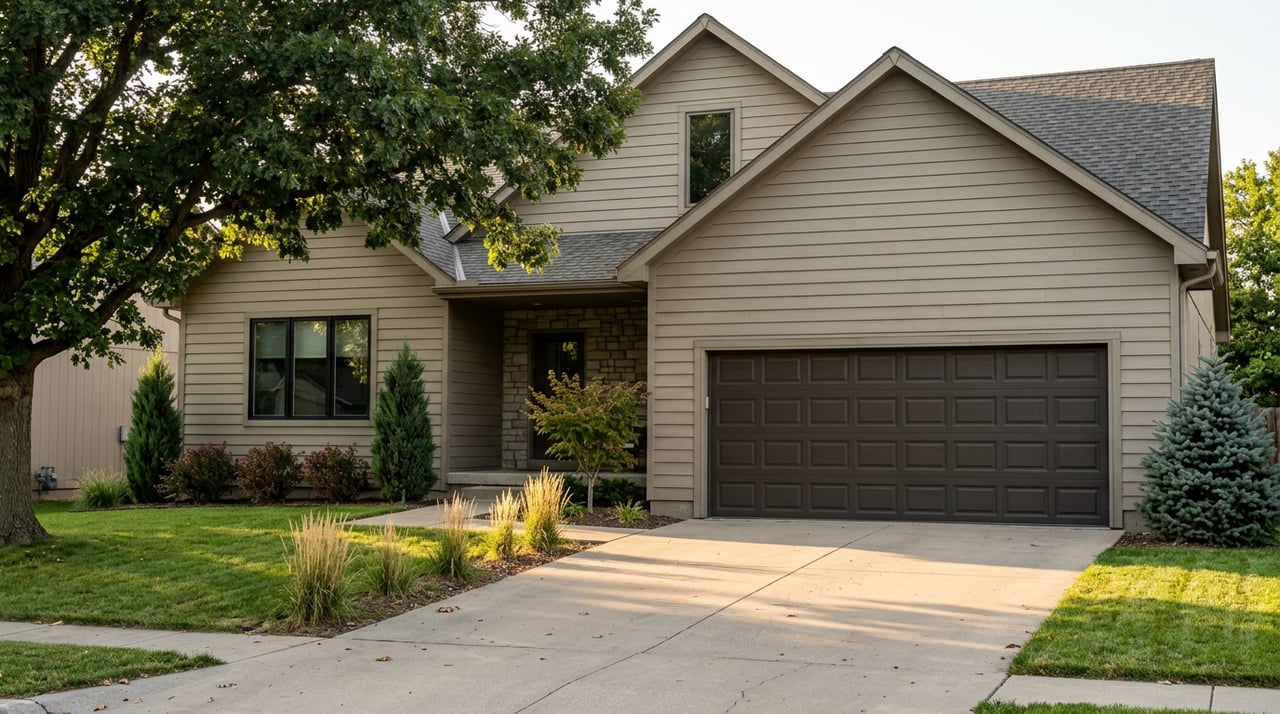
Tour two new construction communities in Johnstown on the same Saturday and you might drive past a sign for Thompson River Ranch in the morning, then a sign for Thompson Crossing in the afternoon, and assume you've circled back to the same neighborhood. You haven't. One of those addresses sits inside a metro district that can add real money to a monthly payment. The other is marketed specifically because it doesn't. Nothing on either builder's price sheet flags which is which, and a buyer comparing the two by list price alone has no way to know.
That mix-up is a small preview of a bigger one showing up in Johnstown's market data right now. If you've been comparing Johnstown to Loveland or Windsor using the median sale price alone, the number made Johnstown look like it's getting cheaper. It isn't. It's getting bigger, in a way that pulls the median down without making any single home worth less.
As of July 2026, the median sale price for a home in Johnstown stood at roughly $499,000, down 5.8 percent from a year earlier. Read on its own, that looks like a town losing value. But over the same stretch, the median sale price per square foot in Johnstown rose 6.7 percent to $223. A market where homes are worth more per square foot while the headline median falls isn't a market in decline. It's a market where what's selling has changed shape.
Homes also moved faster. The typical Johnstown home sold in 44 days as of that same July 2026 window, down from 62 days a year earlier, which is not what you'd expect if buyers were losing interest in the town.
A year-end review of 2025 Northern Colorado sales found the broader region grew a modest 5.28 percent, with the median price essentially flat at $521,500. Johnstown outpaced that by a wide margin, closing 715 sales for the year, a 29.76 percent jump and the largest increase of any town tracked in that report. The driver wasn't broad new demand. It was a wave of supply priced below the regional median, sold with financing structured to move it fast.
Oakwood Homes filed for 166 additional homes at its Thompson River Ranch community this year, with the American Dream and Coach House collections starting in the $300,000s, according to Northern Colorado business publication BizWest. D.R. Horton has been building out two more communities in town, Revere at Johnstown and Ridge at Johnstown, offering paired and single-family plans in a similar price band.
Every one of those homes counts toward the town's median the moment it closes. A run of $350,000 to $480,000 new construction closing alongside existing $550,000 to $650,000 resale inventory pulls the median down even while every individual home, new and resale, holds or gains value. That's the arithmetic behind Johnstown's "falling" price. It isn't falling. It's diluting.
Thompson River Ranch, the master-planned community anchoring Oakwood's growth east of I-25, sits inside the Thompson Crossing Metropolitan District, a taxing authority the town created in 2001 to fund the roads, parks, and pool that came with the development. Filings for that district, including Thompson Crossing Metropolitan District No. 3, are public record through the Special District Association of Colorado.
Thompson Crossing, a separate and confusingly similar-named neighborhood elsewhere in Johnstown, markets itself on the opposite point. Recent resale listings there have advertised "no metro district" and low HOA dues as selling features, a direct contrast to the extra mill levy buyers accept a few miles away.
| Thompson River Ranch | Thompson Crossing | |
|---|---|---|
| Metro district | Yes, Thompson Crossing Metropolitan District | Not per current listings |
| Typical added monthly cost | Often $150 to $400 or more | None reported |
| What it funds | Roads, parks, pool, ongoing amenity upkeep | N/A |
Neither setup is inherently better. A metro district often finances amenities a standalone HOA never could, and the added tax is sometimes deductible in ways HOA dues aren't. But two similarly named communities with very different long-term cost structures make it easy for a buyer working from price alone to think they're comparing apples to apples when they aren't.
One recent Johnstown new construction listing, priced at $553,350, advertised financing as low as 3.50 percent through the builder's preferred lender. A separate Thompson River Ranch listing offered $10,000 in flex cash toward closing costs on a different floor plan. Neither shows up as a price cut in the public record. The home still closes at full price, and that full price becomes the comp the next appraiser and the next buyer's agent pull up.
A builder can buy down a rate without touching the number that ends up in the comps. A resale seller usually can't match that without actually cutting price.
A resale seller a few blocks from an active builder phase is competing against a buyer whose real monthly payment on the new home might be lower even at a higher sticker price. That's the part a simple price-per-square-foot comparison misses.
No. Coverage varies by specific development and sometimes by filing within the same development. Check the parcel, not the town.
Not inherently. It finances shared infrastructure and amenities up front, and the added tax is sometimes deductible in ways HOA dues aren't. It's a cost to plan for, not automatically a reason to walk away.
Largely because a wave of new construction priced below the region's median, paired with builder financing incentives, moved faster than resale inventory could keep pace with.
Johnstown's market right now rewards buyers and sellers who look past the topline number. If you're weighing a new build against a resale home here, or trying to work out what a metro district will actually cost over ten years, an agent who tracks these subdivisions filing by filing can keep you from comparing two very different products as if they were one. Catherine Montgomery works Johnstown alongside the rest of Northern Colorado from that ground level. Start Your Home Search when you're ready to see what your budget actually buys here, metro district and all.
September 3, 2026
August 27, 2026
August 20, 2026
August 13, 2026
August 6, 2026
August 6, 2026
July 23, 2026
July 16, 2026
July 9, 2026
Known for my approachable, professional style, I combine strong negotiation skills with modern marketing and technology to help clients achieve their real estate goals.
Catherine Montgomery
PO BOX: 270005 Fort Collins, CO 80527